Blog
What Is a Motorized Valve and How Does It Work?
2026-05-12
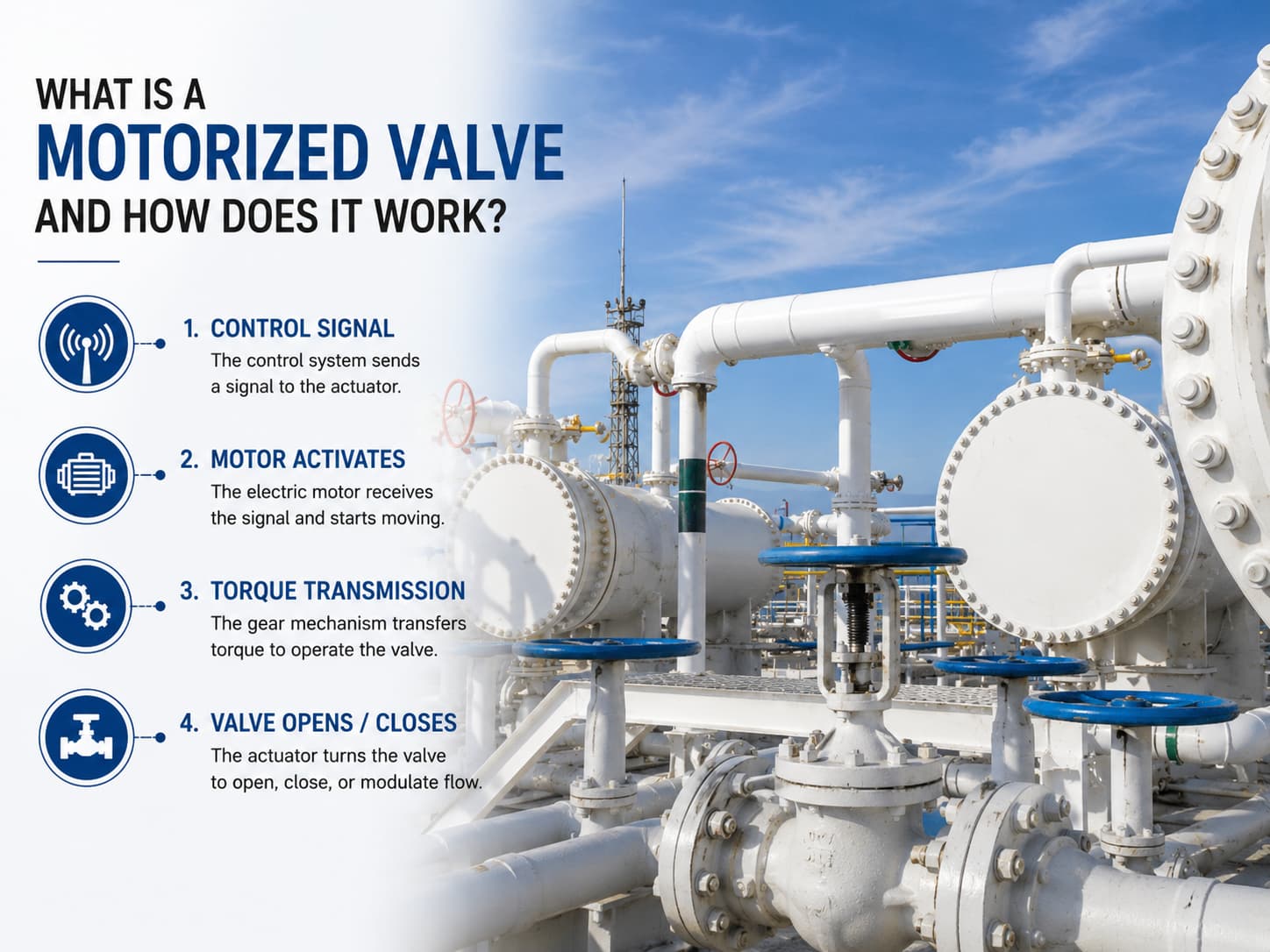
As industrial automation continues to expand across water treatment, HVAC, energy systems, petrochemical plants, and smart manufacturing facilities, the demand for automated flow control has increased significantly. One of the most widely used solutions for automated valve control is the motorized valve.
Motorized valves allow operators and control systems to regulate fluid flow automatically without manual operation. They improve system efficiency, reduce labor requirements, enhance safety, and support remote monitoring and smart control integration.
Although the term “motorized valve” is commonly used in the market, many people are actually referring to a combination of a valve and an electric actuator. Understanding how these components work together is essential when selecting the right automation solution.
Founded in Taiwan in 1986, Sun Yeh Electrical Ind. Co., Ltd. specializes in the development and manufacturing of electric actuators for industrial valve automation applications. Over the years, Sun Yeh has continuously expanded its product portfolio to include quarter-turn electric actuators, spring-return fail-safe actuators, linear electric actuators, multi-turn actuators, and explosion-proof electric actuators. Sun Yeh actuators are widely applied across industries such as oil & gas, water treatment, HVAC, tunnel ventilation, chemical processing, food and beverage, mining, and environmental protection systems.
Searching for a motorized valve solution? Sun Yeh electric actuators are designed to automate ball valves, butterfly valves, dampers, globe valves, and other industrial valve systems with precise and reliable motion control.
What Is a Motorized Valve?
A motorized valve is a valve equipped with an electric actuator that automatically opens, closes, or regulates the flow of liquids, gases, steam, or air within a piping system.
In simple terms:
Motorized Valve = Valve + Electric Actuator
The valve itself controls the fluid flow, while the electric actuator provides the mechanical movement needed to operate the valve automatically.
Motorized valves are widely used in:
- HVAC systems
- Water treatment plants
- Industrial automation
- Petrochemical facilities
- Energy and power plants
- Fire protection systems
- Tunnel ventilation systems
How Does a Motorized Valve Work?
A motorized valve operates by converting electrical energy into mechanical motion through an electric actuator.
1. Control Signal Received
A control system sends an electrical signal to the actuator.
Common control signals include:
- On/Off control
- 4–20mA modulation
- 0–10V control
- Modbus communication
2. Electric Motor Activates
The actuator’s internal motor begins rotating after receiving the signal.
3. Gear Mechanism Transfers Torque
The motor drives a gear train—commonly planetary gears or worm gears—to generate sufficient torque for valve operation.
4. Valve Opens or Closes
The actuator transfers motion to the valve stem, rotating or moving the valve into the required position.
Depending on the application, the valve may:
- Fully open
- Fully close
- Partially modulate flow
Main Components of a Motorized Valve System
| Component | Function |
|---|---|
| Valve Body | Controls fluid flow |
| Electric Actuator | Provides movement and torque |
| Gear Mechanism | Transfers motor power |
| Position Indicator | Shows valve position |
| Control Module | Receives automation signals |
| Manual Override | Allows manual operation during power failure |
Types of Motorized Valves
1. Quarter-Turn Motorized Valves
Quarter-turn valves rotate 90 degrees to open or close.
Common valve types include:
- Ball valves
- Butterfly valves
- Plug valves
These systems typically use rotary electric actuators.
Sun Yeh’s electric actuators are designed for stable torque output, precise positioning, and reliable valve automation in industrial systems.
2. Linear Motorized Valves
Linear valves use straight-line motion to regulate flow.
Common applications include:
- Globe valves
- Gate valves
- Control valves
These systems use linear electric actuators that generate thrust rather than rotational torque.
Linear motion actuators are often used in HVAC systems, steam control systems, and industrial process automation.
3. Fail-Safe Motorized Valves
Certain applications require valves to move automatically to a safe position during power failure.
These systems use fail-safe electric actuators, often with:
- Spring-return mechanisms
- Supercapacitor backup systems
Fail-safe motorized valves are commonly used in:
- Tunnel ventilation
- Fire protection
- Emergency shutdown systems
- Chemical processing
Sun Yeh’s Spring Return Fail-Safe Electric Actuators are engineered for emergency valve automation applications requiring dependable fail-safe operation.
Advantages of Motorized Valves
Automated Flow Control
Motorized valves eliminate manual valve operation and support remote automation.
Improved Safety
They reduce human exposure to hazardous environments and support emergency control systems.
Precise Positioning
Electric actuators allow accurate flow regulation and stable process control.
Energy Efficiency
Motorized valves can optimize fluid flow and reduce system energy consumption.
Smart Integration
Modern actuators integrate with PLC, SCADA, and Industry 4.0 systems.
Common Industrial Applications
HVAC Systems
Used for chilled water, hot water, and air flow regulation.
Water Treatment
Controls water distribution, filtration, and pumping systems.
Petrochemical Plants
Automates flow control in hazardous environments.
Energy and Power Plants
Regulates steam, cooling water, and fuel systems.
Tunnel and Building Ventilation
Controls smoke extraction dampers and emergency airflow systems.
Motorized Valve vs Manual Valve
| Feature | Manual Valve | Motorized Valve |
|---|---|---|
| Operation | Manual | Automatic |
| Remote Control | No | Yes |
| Precision Control | Limited | High |
| Emergency Integration | Limited | Available |
| Labor Requirement | High | Low |
FAQ – Motorized Valves
Q1. What is the difference between a motorized valve and an electric actuator?
A motorized valve is a complete assembly that includes both the valve and the electric actuator. The actuator provides the movement needed to operate the valve automatically.
Q2. Are motorized valves suitable for hazardous locations?
Yes. Explosion-proof electric actuators can be used with valves in hazardous areas such as petrochemical plants and gas facilities.
Q3. What types of valves can be motorized?
Ball valves, butterfly valves, globe valves, gate valves, and dampers can all be automated using electric actuators.
Q4. Can motorized valves support modulating control?
Yes. Many electric actuators support modulating control using 4–20mA or 0–10V signals for precise flow adjustment.
Q5. What happens during a power failure?
Standard actuators stop in place, while fail-safe actuators can automatically move valves to a predefined safe position.
Conclusion: Motorized Valves Enable Smarter Industrial Automation
Motorized valves are a fundamental part of modern industrial automation systems. By combining reliable valve mechanisms with intelligent electric actuators, they enable precise, safe, and efficient flow control across a wide range of industries.
Whether used for quarter-turn valve automation, linear motion control, or fail-safe emergency systems, motorized valves help facilities improve operational efficiency while supporting smarter and safer automation strategies.
With decades of experience in electric actuator manufacturing, Sun Yeh Electrical Ind. Co., Ltd. continues to provide reliable and innovative valve automation solutions for global industrial applications. Sun Yeh products are certified with international standards including CE, CSA, ATEX, IECEx, SIL, and ISO 9001, ensuring dependable quality and safety for critical operating environments.
From quarter-turn and linear electric actuators to fail-safe and explosion-proof actuator solutions, Sun Yeh supports customers worldwide with stable, precise, and long-lasting automation performance.
👉 Learn more about Sun Yeh electric actuator solutions:
https://www.sunyeh.com/en-US/plist1-electric-actuators
