Blog
2026-10-15
Blog
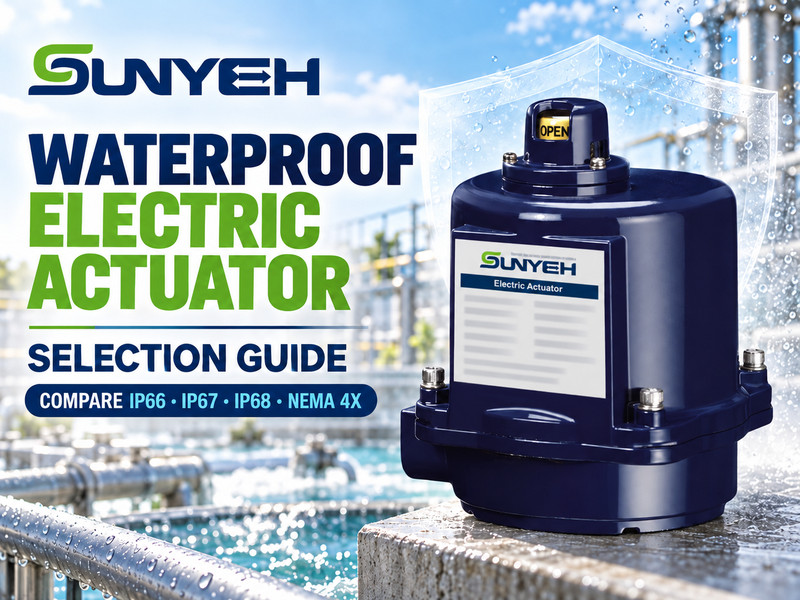
Choosing a Waterproof Electric Actuator: What IP66, IP67, IP68, and NEMA 4X Really Mean
Which waterproof electric actuator is right for rain, washdown, temporary flooding, or immersion? This guide explains the practical differences between IP66, IP67, IP68, and NEMA 4X, including what each rating protects against—and what it does not. Explore SUN YEH electric actuator options and learn which specifications, installation details, and environmental conditions to verify before selecting the right solution for your valve automation system.

2026-09-23
Blog
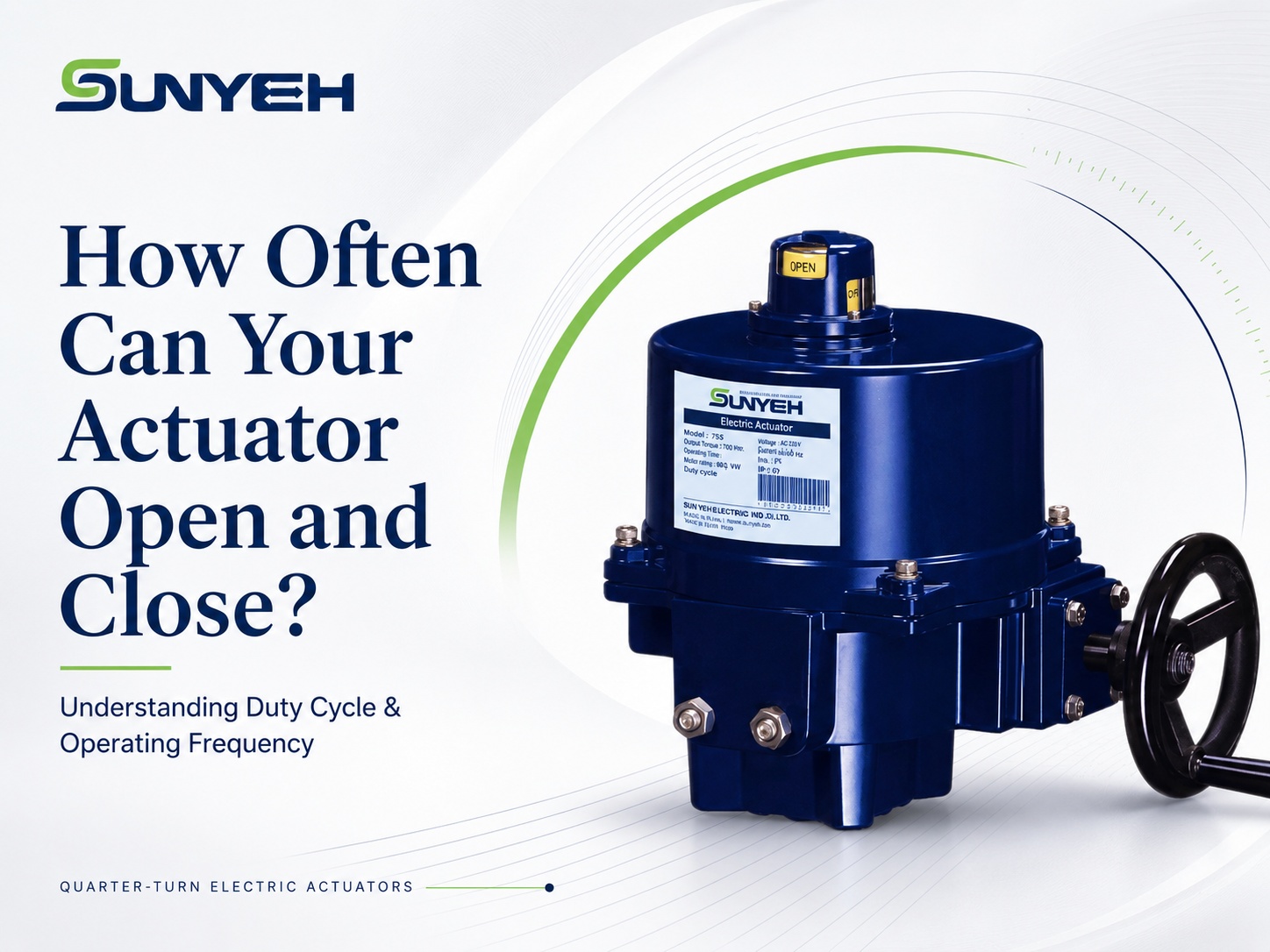
How Often Can a Quarter-Turn Electric Actuator Open and Close?
Can your actuator keep up with frequent valve operation? Discover how duty cycle, travel time, and motor starts affect operating frequency. Using a practical SUN YEH OM-2 example, this guide explains how to estimate rest time and evaluate whether an actuator matches your application’s demands.
2026-08-14
Blog
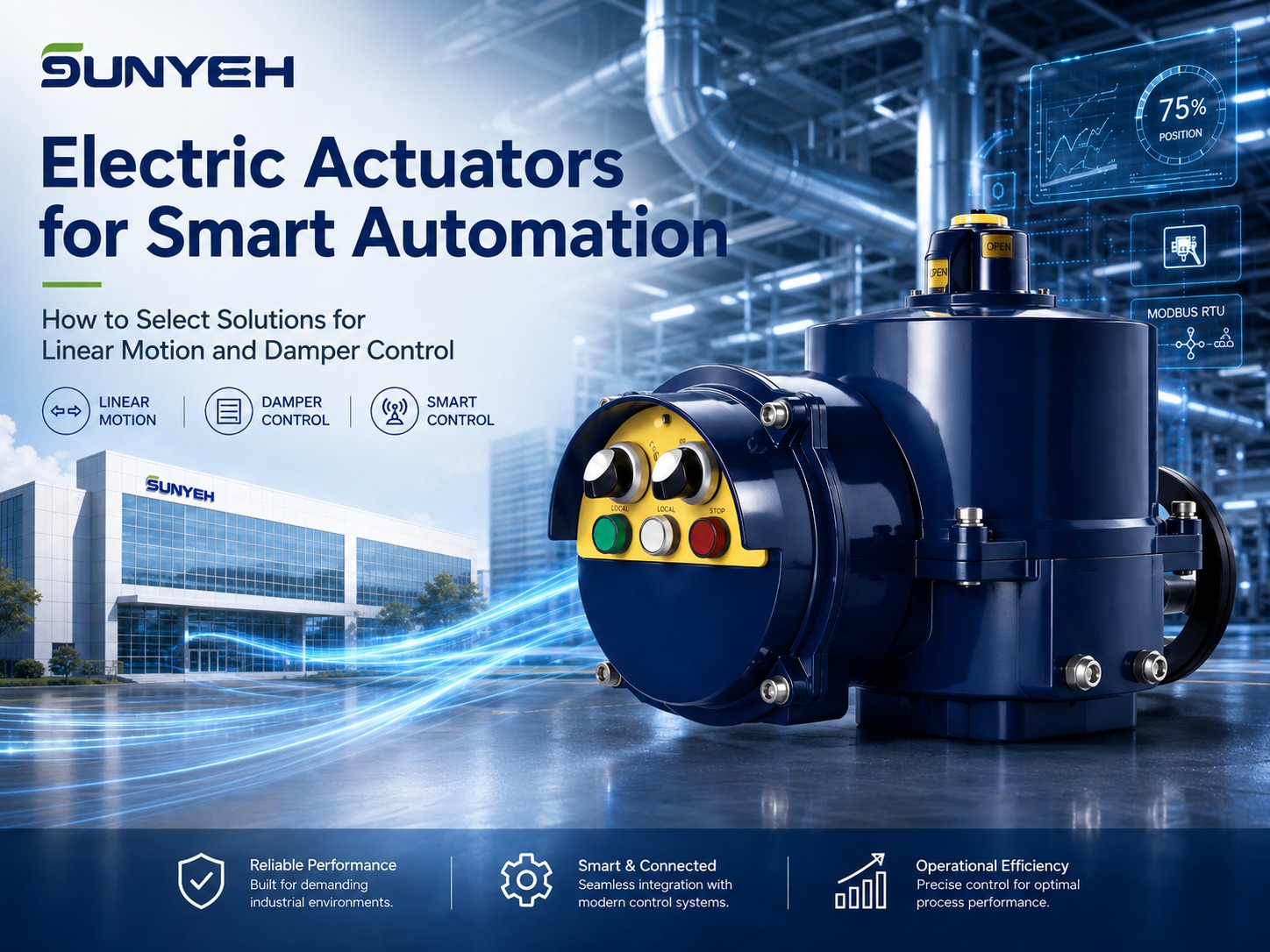
Electric Actuators for Smart Automation: How to Select Solutions for Linear Motion and Damper Control
How do you choose the right electric actuator for linear motion, damper control, and smart automation? This article explains the differences between linear electric actuators, electric damper actuators, and smart electric actuators, while covering key factors such as Modbus communication, position feedback, fail-safe operation, and control integration to help engineers and system integrators make more informed actuator decisions.
2026-07-03
Blog
How to Choose the Right Electric Actuator for Your Valve Application
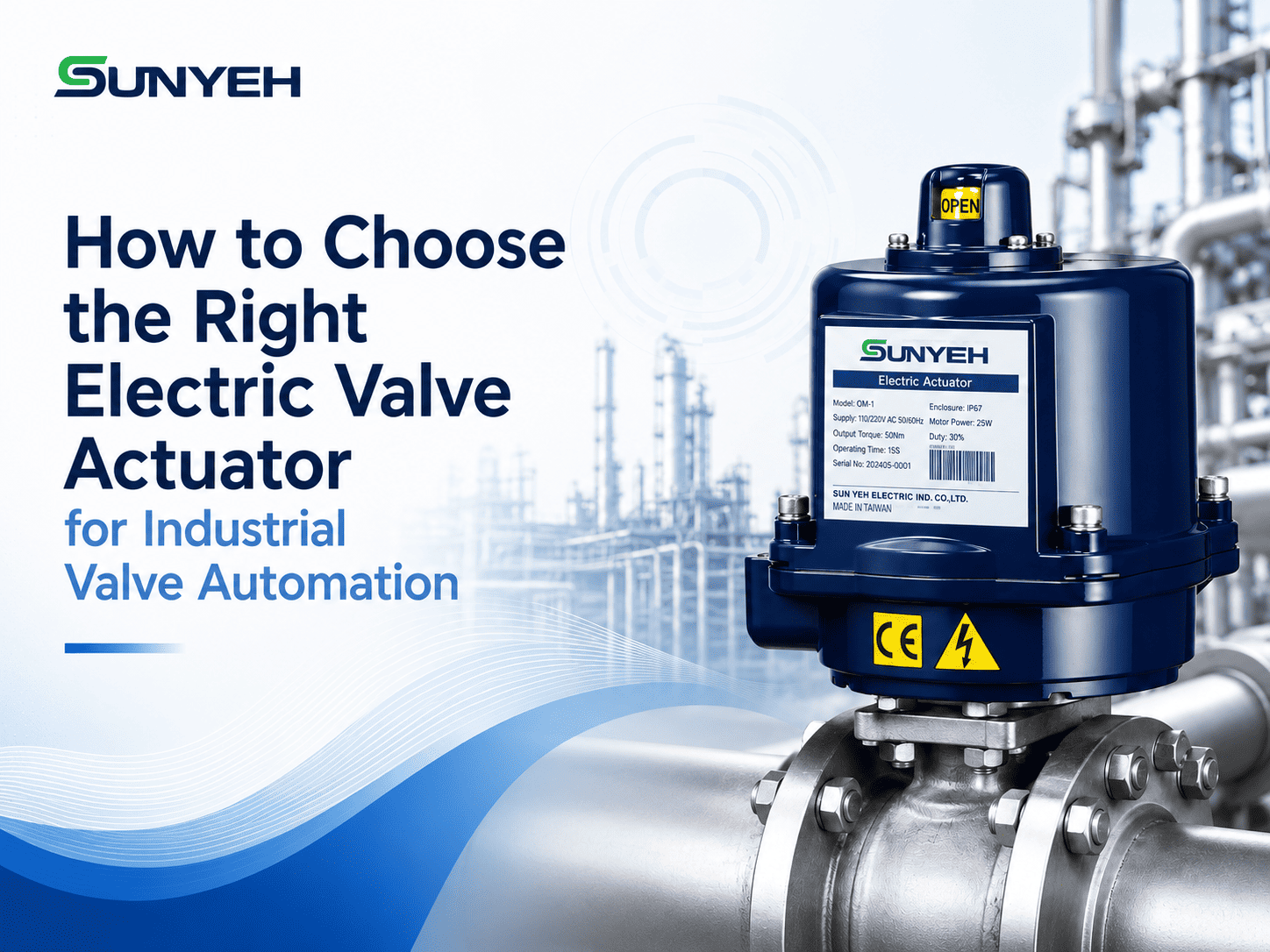
Choosing the right electric valve actuator takes more than matching valve size. This guide shows how to evaluate valve motion, torque or thrust, quarter-turn requirements, control methods, fail-safe needs, mounting, and operating conditions—helping engineers, OEMs, and system integrators narrow down the right SUN YEH actuator solution with greater confidence.
2026-06-01
Blog
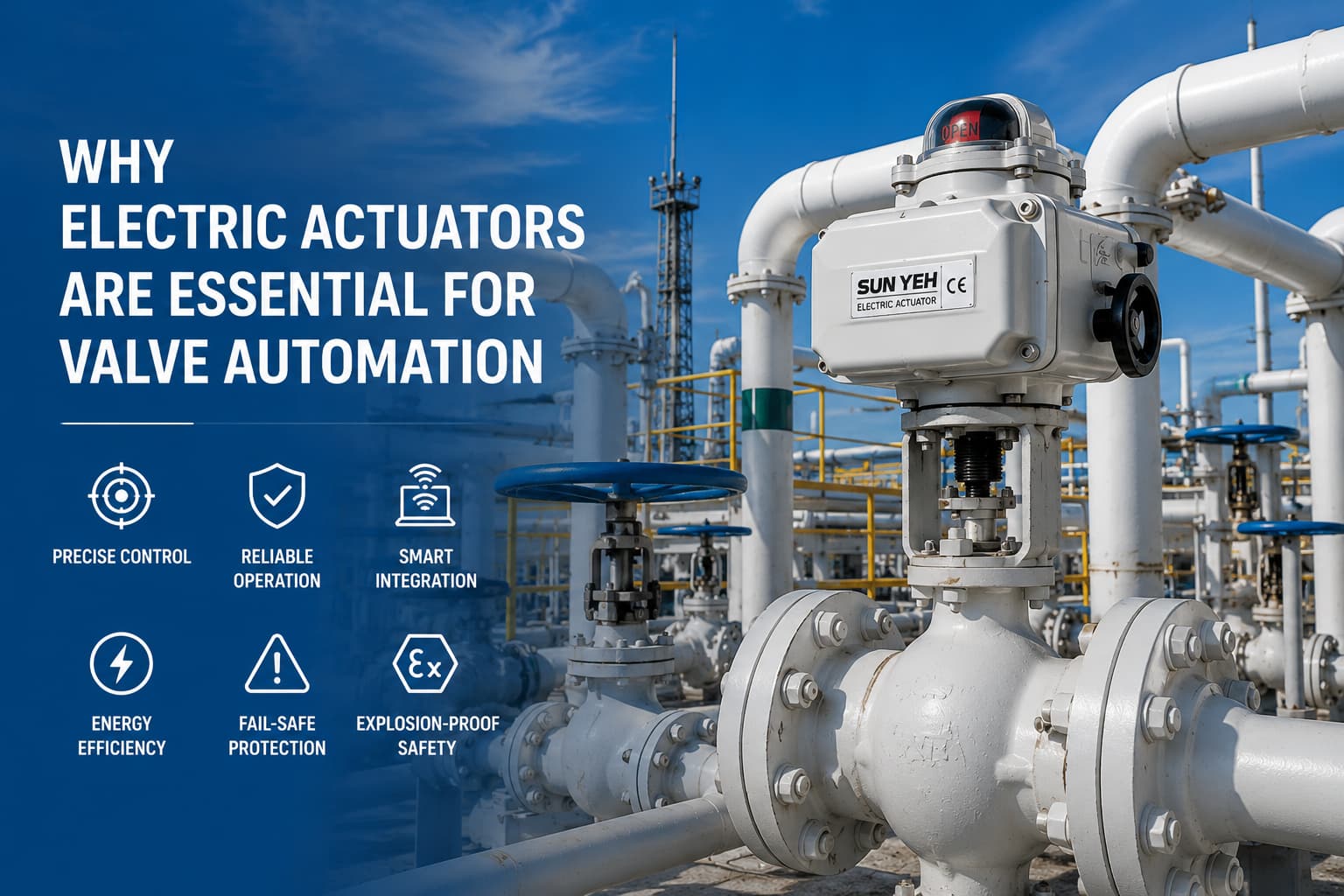
Why Electric Actuators Are Essential for Valve Automation
An electric actuator is a device that converts electrical energy into mechanical motion to operate a valve, damper, or other flow-control equipment.
2026-05-12
Blog
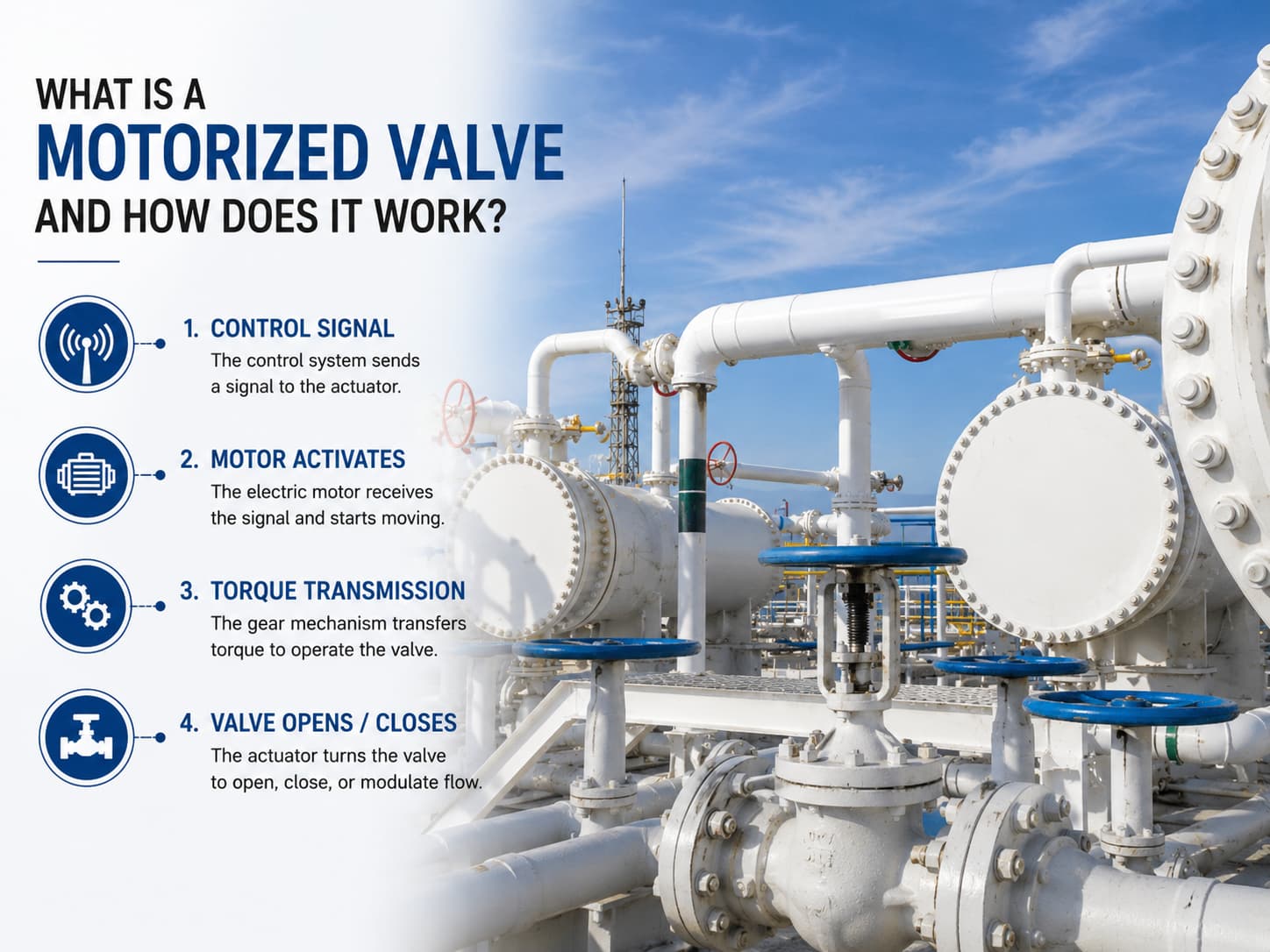
What Is a Motorized Valve and How Does It Work?
A motorized valve is a valve equipped with an electric actuator that automatically opens, closes, or regulates the flow of liquids, gases, steam, or air within a piping system.
In simple terms:
Motorized Valve = Valve + Electric Actuator