Blog
What Is a Hazardous Location Electric Actuator? A Complete Guide
2026-03-02
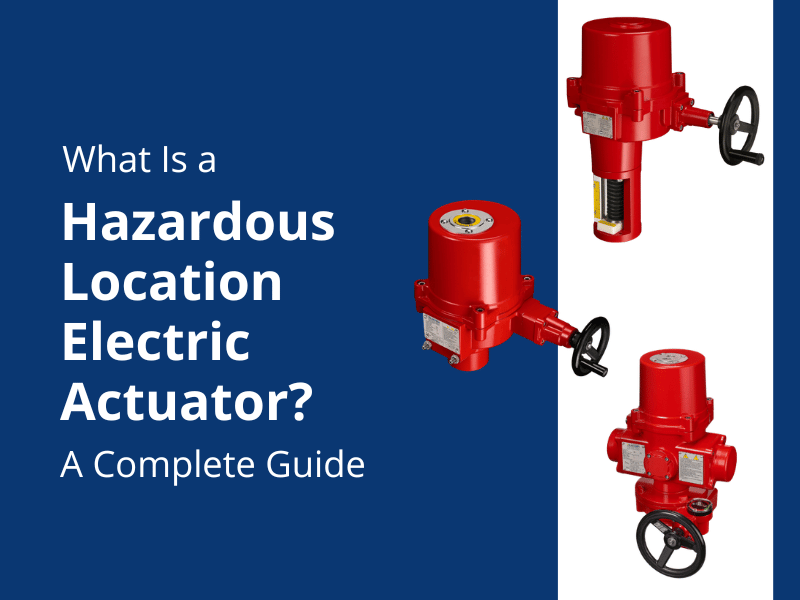
In industrial automation, actuators play an essential role in controlling valves and mechanical systems. However, when these actuators are used in environments where explosive gases, vapors, or combustible dust may be present, standard actuators are not sufficient. This is where hazardous location electric actuators—designed for high-risk industrial environments—become critical for safety, reliability, and performance.
In this article, we’ll explain what a hazardous location electric actuator is, why it matters, and how it is engineered to operate safely under demanding conditions. We will also introduce three key product categories from Sun Yeh Electrical Ind. Co., Ltd. that are widely used in hazardous-area applications.
1. What Is a Hazardous Location Electric Actuator?
A hazardous location electric actuator is an electric actuator engineered to operate safely in environments where explosive gases, vapors, or combustible dust may exist. These environments are typically classified into zones based on the likelihood and duration of hazardous atmospheres—such as Zone 1 / Zone 2 for gas and Zone 21 / Zone 22 for dust.
Unlike standard actuators, hazardous location electric actuators integrate explosion-proof design features to prevent internal sparks or high surface temperatures from igniting explosive atmospheres. They achieve this through specialized enclosures, controlled surface temperatures, robust sealing, and certified protection systems.
2. Why Hazardous Locations Require Specialized Actuators
Hazardous areas often combine explosion risk with challenging operating conditions such as:
- Flammable gases and vapors
- Combustible or conductive dust
- High humidity and condensation
- Temperature fluctuations
- Mechanical vibration from pumps and compressors
To operate safely and reliably, hazardous location actuators must:
- Contain and isolate potential ignition sources inside the enclosure
- Prevent ignition of external explosive atmospheres
- Maintain stable mechanical performance and accurate motion control
- Resist dust, moisture, and corrosion over long service life
3. Key Engineering Strategies for Hazardous Location Electric Actuators
Explosion-Proof Enclosures
Hazardous location actuators use flameproof and dust-ignition-proof enclosures designed to prevent internal ignition from propagating into the surrounding atmosphere. Precision flame paths, sealed interfaces, and appropriate material selection help maintain enclosure integrity under hazardous conditions.
Surface Temperature Control
In hazardous environments, controlling surface temperature is essential. Actuators are designed so that external surface temperatures remain within safe limits to reduce the risk of ignition for gases or dust present in the area.
Sealing and Ingress Protection
Robust sealing systems and high ingress protection help prevent dust and moisture from entering the housing, protecting electrical components, bearings, and drive mechanisms from premature failure.
4. Sun Yeh Hazardous Location Electric Actuator Solutions
Sun Yeh provides multiple explosion-proof electric actuator categories designed for hazardous environments. Depending on valve type, motion requirement, and safety strategy, the following three product families are commonly applied:
4.1 Explosion-Proof Spring Return / Fail-Safe Electric Actuators – SE Series
The Explosion-Proof Spring Return Fail-Safe Electric Actuators (SE Series) combine explosion-proof capability with fail-safe action. In power-loss scenarios, fail-safe actuators help drive valves to a predefined safe position—supporting safety-critical applications that require reliable emergency response behavior.
4.2 Explosion-Proof Quarter-Turn Electric Actuators – OME Series
The Explosion-Proof Quarter-Turn Electric Actuators (OME Series) are designed for quarter-turn valves such as ball valves and butterfly valves. They provide stable torque output and dependable operation for hazardous-area valve automation in industries such as petrochemical, oil & gas, and chemical processing.
4.3 Explosion-Proof Linear Electric Actuators – LE Series
The Explosion-Proof Linear Electric Actuators (LE Series) are built for applications requiring linear motion—commonly used with valve types that need straight-line travel. Their explosion-proof enclosure design, sealing strategy, and mechanical structure support reliable performance in hazardous environments.
5. Hazardous Area Classifications and Why They Matter
Hazardous area classifications help engineers select the correct actuator protection level. Common zone concepts include:
- Zone 1 / Zone 21: explosive atmosphere is likely during normal operation
- Zone 2 / Zone 22: explosive atmosphere is unlikely during normal operation, but possible under abnormal conditions
Actuator selection should match the site’s hazardous zone classification and the relevant certification requirements to ensure compliance and safe operation.
6. Benefits of Using Hazardous Location Electric Actuators
- Improved Safety: explosion-proof design reduces ignition risk in hazardous atmospheres.
- Reliable Operation: robust sealing and enclosure integrity support long-term stability in harsh environments.
- Precision Control: electric actuation supports accurate valve positioning for process consistency.
- Fail-Safe Capability: fail-safe options help move valves to a safe position during power loss.
FAQ – Hazardous Location Electric Actuators
Q1. What defines a hazardous location?
A hazardous location is an area where flammable gases, vapors, or combustible dust may be present, requiring certified equipment designed to reduce ignition risk.
Q2. What is the difference between an explosion-proof actuator and a general actuator?
Explosion-proof actuators are designed and certified to contain potential ignition sources and prevent ignition of surrounding hazardous atmospheres. General actuators do not provide this protection.
Q3. Why are fail-safe actuators important in hazardous facilities?
Fail-safe actuators help ensure valves move to a predefined safe position during power loss or emergency conditions, supporting safer system behavior.
Q4. Can one actuator be suitable for both gas and dust hazardous areas?
Some actuators are designed and certified to address both gas and dust hazards. Selection should be based on the site’s classification and required certifications.
Q5. Do hazardous location electric actuators require special maintenance?
Routine checks typically include sealing integrity, enclosure condition, cable entry sealing, and functional verification, especially in harsh environments.
Conclusion
A hazardous location electric actuator is not just a motion device—it is a safety-critical component for valve automation in explosive industrial environments. By combining explosion-proof engineering with stable and accurate actuation, hazardous location actuators support safer operations and improved reliability.
If you are evaluating solutions for hazardous-area valve control, Sun Yeh offers multiple explosion-proof actuator families—covering fail-safe spring return, quarter-turn, and linear actuation—to support different valve types and safety requirements:
- Explosion-Proof Spring Return Fail-Safe Electric Actuators (SE Series)
- Explosion-Proof Quarter-Turn Electric Actuators (OME Series)
- Explosion-Proof Linear Electric Actuators (LE Series)
For application guidance or technical support, please contact Sun Yeh’s team to discuss your hazardous-area requirements.
